
Hoi An is a historic port town and UNESCO World Heritage Site that served as a major trading hub from the 15th to the 19th century. It is known for its exceptionally well-preserved Ancient Town, characterized by yellow-walled merchant houses, vibrant lanterns, and a unique blend of Chinese, Japanese, and European architectural influences.
Day 11 – Flying to Hoi An & Exploring Old Town
After yet another early morning flight, we arrived at Da Nang Airport and boarded a bus for about a one-hour ride to our hotel in Hoi An.
After checking in and dropping off our bags, we went straight for bánh mì. This popular Vietnamese sandwich blends French and Vietnamese culinary influences, typically served on a light, airy baguette with a crisp crust.
We visited Bánh Mì Phượng, a spot that gained international recognition after Anthony Bourdain featured it on No Reservations and called it a “symphony in a sandwich.” I ordered the vegan option with tofu and avocado. I was so hungry I forgot to take a photo, but it was delicious.

After lunch, we explored Hoi An’s Old Town, admiring its historic architecture, including the Cantonese Assembly Hall. Built in 1885 by Chinese merchants from the Guangdong (Guangzhou) region, it was originally dedicated to the Goddess of the Sea (Thiên Hậu), before later shifting its focus to Quan Công. The hall served as both a place of worship and a community hub for meetings.


Nearby, we stopped at the Japanese Covered Bridge, a 400-year-old bridge built by Japanese merchants to connect with the Chinese community across the stream. The bridge features traditional Japanese architectural design with Chinese and Vietnamese decorative elements, reflecting a unique blend of the three cultures.


We had the rest of the evening free. I did a bit of shopping, but I found Hoi An’s Old Town a little too crowded and overstimulating, so I made my way back to the hotel.

For dinner, I went to KURUMI – Healthy Vegan Food & Desserts, conveniently located next door to our hotel. The food was delicious, reasonably priced, and I even preferred their vegan bánh mì.
Day 12 – Hoi An Farm Tour & Basket Boats
We started the day at an organic farm, learning about the crops grown in the region. The group then biked to the next destination, but since another traveller and I never learned how to ride a bike, we took the bus instead.


At our next stop, we boarded a thúng chai, or “basket boat.” These round boats date back to the French colonial period, when taxes were imposed on boat ownership. To avoid paying, local fishermen designed woven “baskets” and argued they weren’t technically boats, and it worked.


Day 13 – Free Day
We had a free day, so I booked two tours: Mỹ Sơn Sanctuary in the morning and Monkey Mountain and Marble Mountains in the afternoon.
Mỹ Sơn Sanctuary
Mỹ Sơn is a UNESCO World Heritage Site consisting of ancient Hindu temples built by the Champa Kingdom. Construction began under King Bhadravarman (reigned 380–413) and continued through the 13th century. The site served as a religious and ceremonial centre, as well as a burial place for Cham royalty and national heroes.


During the Vietnam War, Mỹ Sơn was used by the Viet Cong as a field headquarters, making it a target for heavy U.S. bombing. Much of the site was destroyed in a single week in August 1969, leaving only about 20 of the original 70 major structures standing.


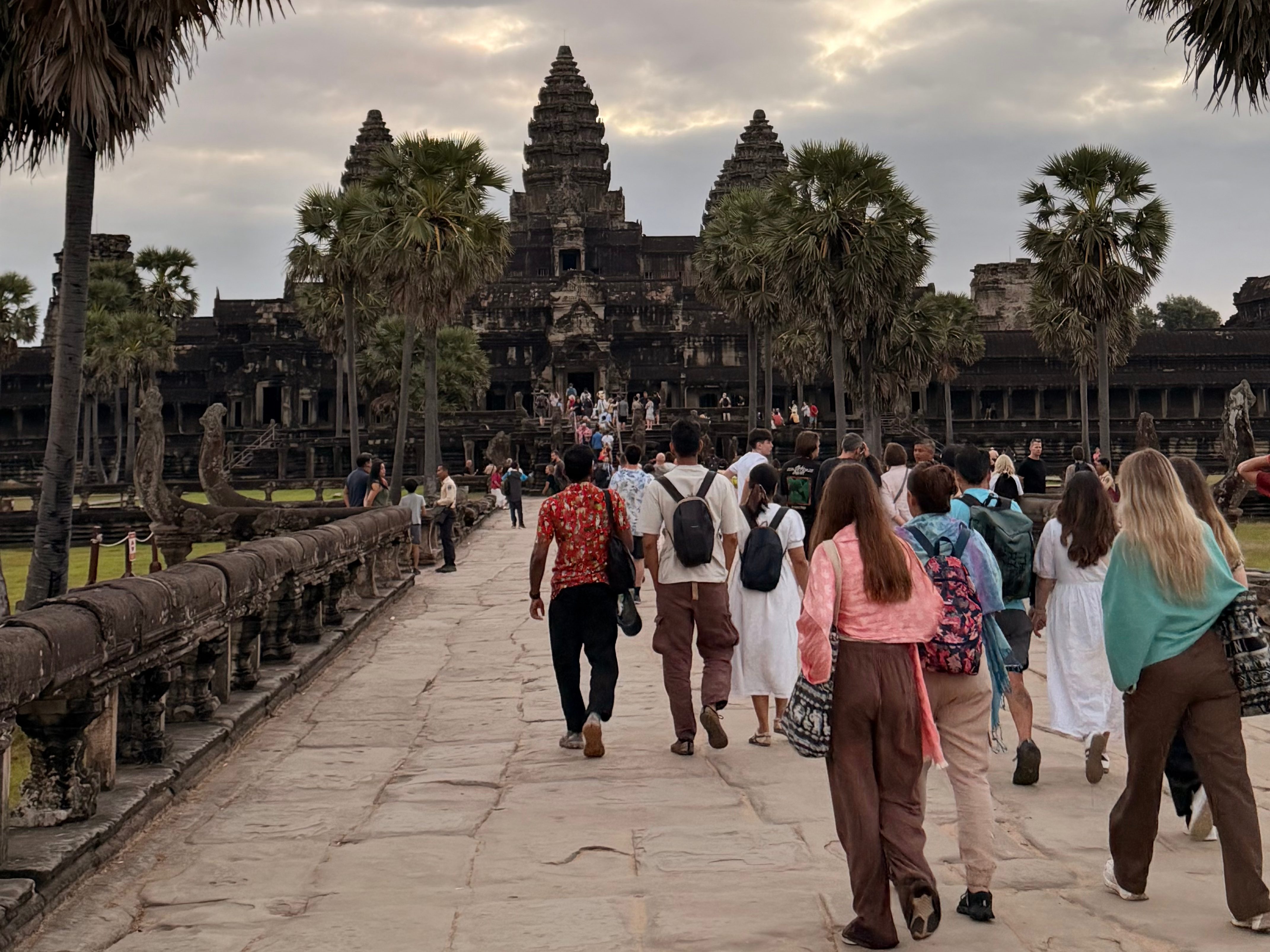
I really enjoyed visiting Mỹ Sơn, it reminded me of Angkor Wat, but without the crowds. While not as grand, it’s just as rich in history.
Monkey Mountain (Sơn Trà Mountain)
In the afternoon, I visited Sơn Trà Mountain, also known as Monkey Mountain, a peninsula overlooking Da Nang and the East Sea. The name was given by American soldiers during the Vietnam War due to the large population of monkeys, including the rare red-shanked douc langur.


At the summit stands the Lady Buddha statue (Goddess of Mercy), rising 67 metres high and set on a lotus-shaped platform. It is believed to protect local fishermen and the city from storms.


The Lady Buddha statue is part of the Linh Ứng Pagoda complex, which spans 20 hectares and includes multiple structures. Linh Ứng Pagoda of Son Tra Peninsula is one of three pagodas of the same name, the others are located at Marble Mountains to the south and Ba Na Hills to the west, forming a “Buddhist triangle” that locals believe protects the city of Da Nang.


Marble Mountains
Lastly, I visited the Marble Mountains, a cluster of five marble and limestone hills located about seven kilometres from Da Nang. Each mountain is named after one of the five elements: metal (Kim), water (Thuỷ), wood (Mộc), fire (Hoả), and earth (Thổ). We explored Water Mountain.
Located at the foothills of Thủy Sơn is a large cave depicting the Buddhist underworld, where sinners confess their crimes, endure punishments, and seek redemption on their path toward the light. Discovered in the 19th century, the cave was named Âm Phủ (Vietnamese for “hell”) by Emperor Minh Mạng, reflecting the concept of yin and yang, where the mountain top symbolizes heaven, and the cave below represents the underworld.


Reaching the top of the mountain isn’t easy, it takes a long climb up many steps, though you can pay for an elevator to skip the first half.

After the first sets of stairs, we reached Linh Ung Pagoda (also know as Non Nuoc Pagoda). It is believed to have been originally constructed in the 17th century, with later reconstruction taking place in the early 19th century under Emperor Minh Mạng. The peaceful setting made it feel like a moment to catch both your breath and your thoughts before continuing the climb.


Just behind Non Nuoc Pagoda, we entered Tang Chon Cave, a natural cave with an open ceiling. It features multiple chambers, many of which contain shrines and Buddha statues. Within the largest chamber, Linh Ứng Chơn Tiên Temple was built, where a Buddha sits in meditation at its centre.


The mountains are filled with caves and tunnels, many of which were used by Viet Cong and North Vietnamese forces during the Vietnam War as hiding places, field hospitals, and strategic bases. One of the most notable is Huyền Không Cave, where openings in the ceiling, created by bombing, now allow beams of light to shine through.


Before reaching the lookout, we stopped to admire Tam Thai Pagoda, one of the oldest and most significant pagodas in Da Nang, with a history spanning nearly 400 years. Out front stands a statue of the Laughing Buddha, symbolizing prosperity, contentment, and happiness.

I was definitely winded by the time we reached the summit, but the views made it completely worth it.

Leave a Reply